 Default Currency

 Upload Files
 Log In


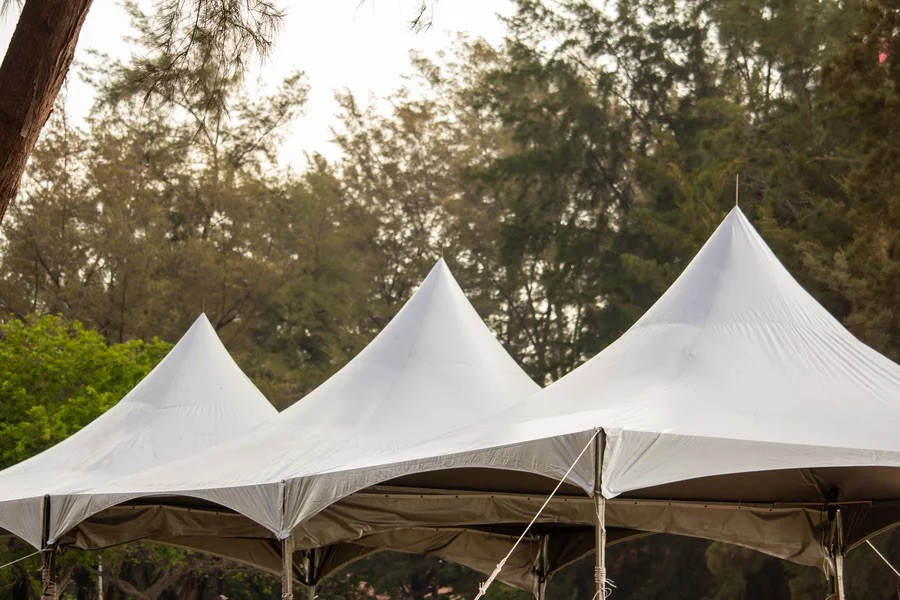
TL;DR: Choosing the rightevent tent sizes helps businesses create comfortable, functional spaces for trade shows, festivals, corporate gatherings, and other outdoor events. The ideal tent depends on available square footage, expected attendance, equipment needs, and venue restrictions.
- Compare standard sizes: Common options range from compact 5x5 canopies to larger 10x20 and 20x20 tents.
- Calculate space requirements: Account for employees, visitors, tables, displays, equipment, and extra room for movement.
- Match the tent to the event: Promotional booths, farmers markets, and corporate gatherings have different space requirements.
- Consider tent styles: Pop-up canopies offer portability and easy setup, while frame tents accommodate larger gatherings.
- Check venue requirements: Review height restrictions, anchoring needs, available space, and local regulations before purchasing.
Planning an outdoor event involves plenty of decisions, but choosing the right tent is one of the most important. Your tent needs to accommodate your team, equipment, displays, and visitors while providing enough room for everyone to move comfortably. Too small, and the space feels cramped. Too large, and you may spend more than necessary.
Understanding event tent sizes can help you make a smarter investment. From compact promotional canopies to expansive structures for large gatherings, there are several options to consider.
So, what size event tent do I need? The answer depends on your event type, expected attendance, equipment, and available space. Here's how to evaluate your options.
Understanding Standard Event Tent Sizes
Not every event requires the same amount of covered space. Fortunately, standard event tent sizes provide options for everything from small promotional booths to large corporate gatherings.
Common tent sizes for events include:
- 5x5 feet: A compact option for small displays, information stations, or limited-space promotions.
- 10x10 feet:One of the most popular sizes for trade shows, farmers markets, festivals, and promotional events.
- 10x15 feet:Provides additional room for product displays, tables, or equipment while maintaining a relatively compact footprint.
- 10x20 feet:A versatile choice for businesses needing more space for demonstrations, customer interactions, or multiple display areas.
- 20x20 feet and larger: Suitable for larger gatherings, hospitality areas, or events requiring substantial covered space.
These dimensions represent common options, but availability varies by manufacturer and tent style.
When comparing tents by size, remember that the listed dimensions generally describe the tent's footprint rather than its usable interior after furniture and equipment are installed.
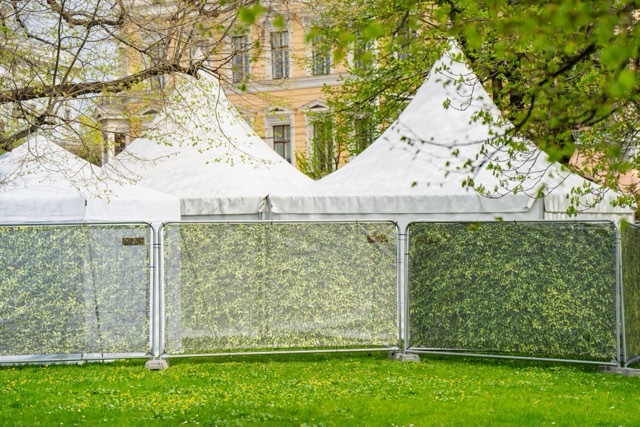
How to Calculate Your Event Tent Space Requirements
Before choosing a tent, calculate the amount of space your event activities will require.
Start by identifying the number of people who will occupy the tent at one time. Then account for tables, chairs, merchandise, equipment, and other features.
For example, a 10x10 tent provides 100 square feet of covered space, while a 10x20 tent provides 200 square feet.
However, that doesn't mean every square foot is available for attendees. A demonstration table, promotional counter, or product display can occupy a significant portion of the interior.
When calculating your space requirement, consider:
- The number of employees working inside the tent
- Expected visitor traffic and gathering areas
- Tables, chairs, counters, and promotional displays
- Product demonstrations or equipment
- Walkways, entrances, and accessibility needs
- Storage for supplies and personal belongings
Adding extra space for movement can make your event setup more comfortable and functional.
Choosing Event Tent Dimensions Based on Your Event
Different types of outdoor events have different space requirements. Matching your tent to the activities taking place beneath it helps you avoid overcrowding and unnecessary expenses.
Trade Shows and Promotional Events
For outdoor trade shows, festivals, and marketing activations, a 10x10 canopy is often a practical starting point.
This size can accommodate a branded table, promotional materials, and a small team while maintaining a manageable footprint.
Businesses planning product demonstrations or displaying larger merchandise may benefit from a 10x20 tent.
A larger tent provides more flexibility for arranging displays and creating separate areas for customer interactions.
Farmers Markets and Community Festivals
Vendors at farmers markets and community festivals often use compact canopies because event organizers assign standardized spaces.
A 10x10 tent may provide enough room for a sales table, merchandise, and basic storage.
However, businesses with extensive inventory or multiple employees may need additional covered space.
Always review the event organizer's guidelines before purchasing a tent, as some venues limit permitted dimensions.
Corporate Events and Outdoor Gatherings
A corporate event may require significantly more room than a standard promotional booth.
If your company is hosting a reception, employee gathering, or customer appreciation event, you'll need to account for seating, food service, entertainment, and guest circulation.
For larger gatherings, frame tents and other event structures may provide the necessary coverage.
The appropriate dimensions depend on the number of guests and the activities planned.
Pop-Up Canopies vs. Frame Tents
When comparing event tent sizes, it's also important to understand the differences between tent styles.
Pop-up canopies are designed for portability and relatively quick assembly. They typically feature collapsible frames and are popular for trade shows, promotional events, and temporary outdoor displays.
These tents are especially useful for businesses that travel frequently and need equipment that can be transported and stored easily.
Frame tents, on the other hand, generally use a more substantial structural framework. They can accommodate larger covered areas and are commonly used for weddings, corporate gatherings, and other events requiring extensive shelter.
Some frame tents also allow for flexible interior layouts because they don't require center poles.
For businesses focused on marketing and promotional activities, portable pop-up canopies often provide a convenient balance of coverage, branding opportunities, and ease of use.
Don't Forget About Tent Height
Width and length aren't the only important event tent dimensions.
Height can affect visibility, comfort, and the types of displays you can use beneath the canopy.
A tent with sufficient clearance makes it easier for visitors to enter and move around without feeling crowded.
Peak height also influences the overall appearance of the tent, particularly when branded graphics are printed on the canopy.
Before purchasing, review both the peak height and the clearance beneath the canopy edges.
Also consider venue restrictions. Some outdoor event organizers establish maximum height limits for tents and promotional structures.
Consider the Space Around Your Tent
Your tent's footprint isn't necessarily the total amount of space you'll need at the venue.
Anchoring systems, guy lines, weights, and other equipment may extend beyond the covered area.
For example, a 10x10 tent might require additional surrounding space for proper anchoring and safe operation.
This is especially important when setting up on pavement, grass, or other surfaces with different anchoring requirements.
Before selecting the right tent, confirm that the venue can accommodate the tent, its anchoring system, and any necessary access routes.
You should also review local requirements related to permits, fire safety, and temporary structures.
Should You Choose a Larger Tent?
Choosing a bigger tent can provide flexibility, but more space isn't always better.
A larger tent may offer additional room for displays, employees, and visitors. However, it can also require more transportation space, additional setup time, and a larger investment.
Think about your typical event schedule.
If most events provide standardized 10x10 spaces, purchasing a significantly larger canopy may limit where you can use it.
On the other hand, businesses that regularly host demonstrations or outdoor promotional activities may benefit from the added flexibility of a 10x20 tent.
The best option balances your current requirements with the types of events you expect to attend in the future.
Find the Right Event Tent at Display Overstock
Understanding event tent sizes helps you create a more comfortable, functional, and professional outdoor exhibit. By evaluating your available square footage, expected attendance, equipment, and venue requirements, you can choose a tent that supports your marketing goals.
At Display Overstock, we offer portable event tents and branded canopy solutions designed for businesses attending trade shows, festivals, promotional events, and other outdoor gatherings.
Explore our selection of custom event tents and find the right size to showcase your brand at your next event.
Find your event tent size today!